
Dancing in the In-Between: Annette Messager’s Tragikomedie
Thesis Psychosis
This month I’ve begun the process of writing my bachelor’s thesis, which, if you’ve gone through something similar yourself, know that it requires a certain level of submersion into a subject which borders on obsession. But any good rabbit trail requires commitment. The subject in question is liminality – the “betwixt and between” state of transformative chaos which is bookended by states of structure. Traditionally only considered within the realms of ritual rites of passage (think baptisms, bar mitzvahs, or weddings) liminality has since begun to enter cultural consciousness – the term being used to describe spaces, periods of time, or states of being. I’m particularly interested in liminality’s place within contemporary culture, and what its presence as a thread which runs throughout modernity says about not just our current, confusing time but also what it could mean for the future.
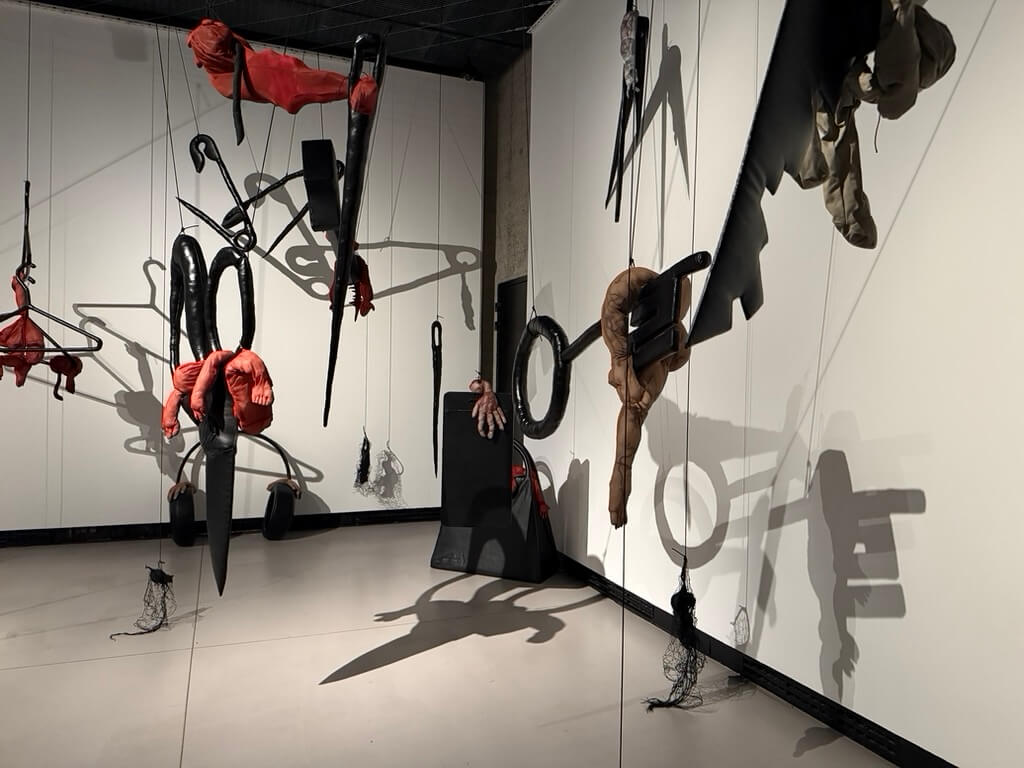
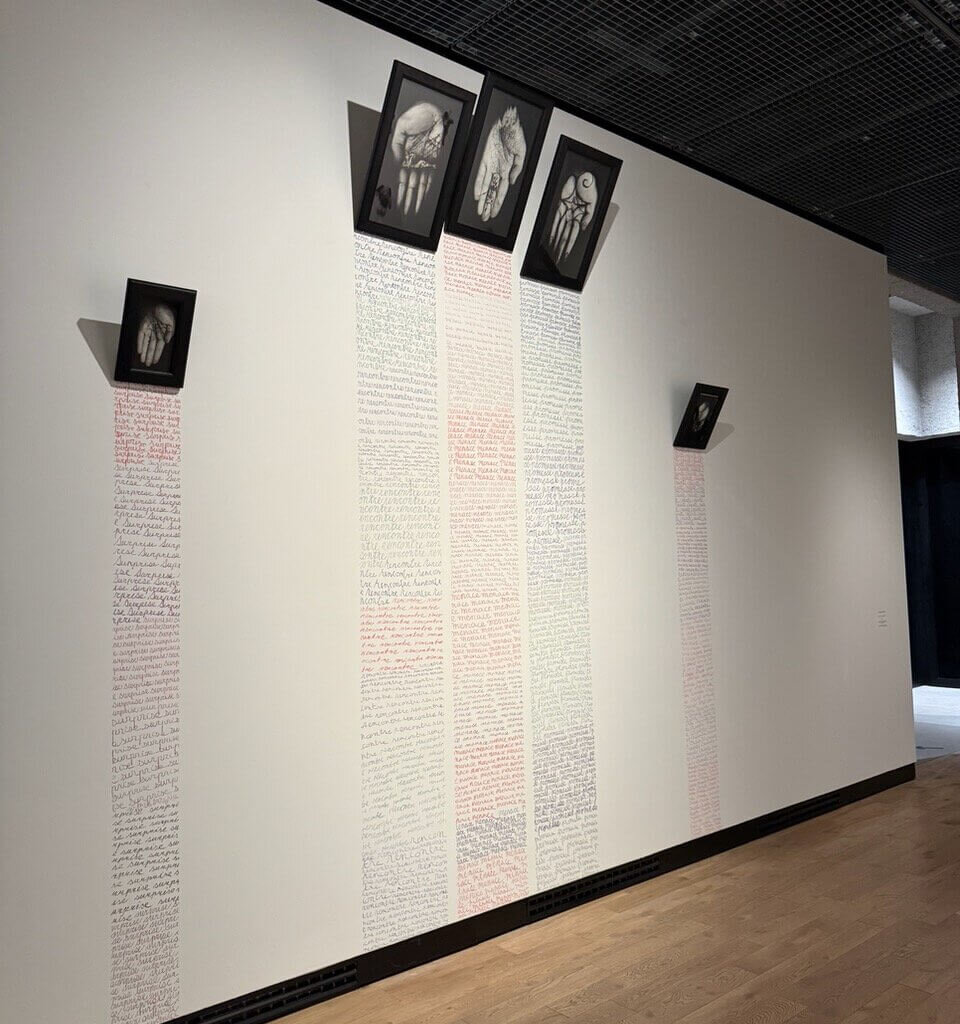
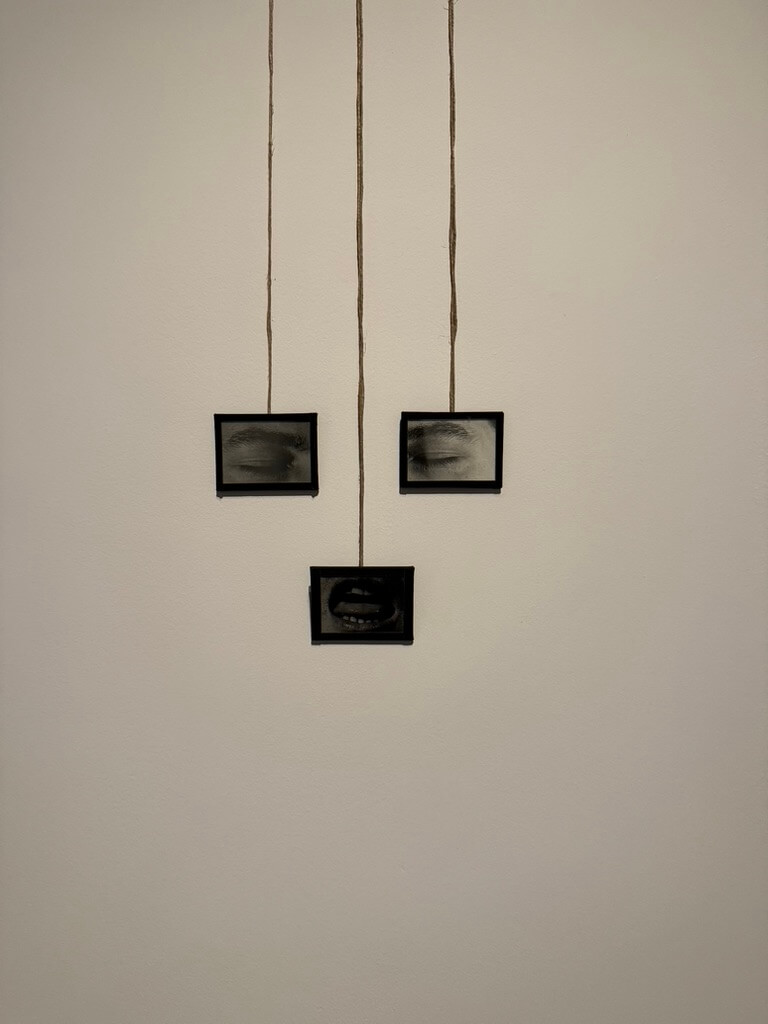
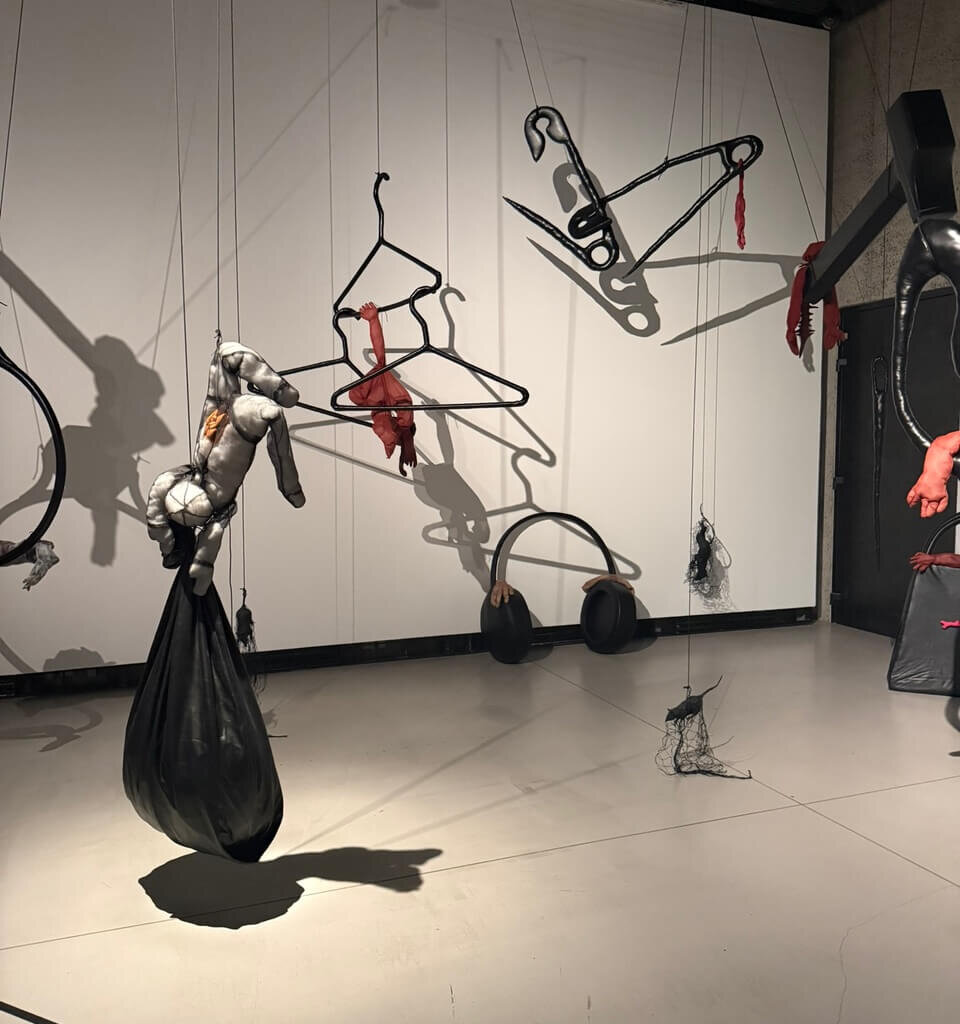
The problem with saturating yourself so deeply in a topic is that you tend to see it everywhere — sometimes even in places where it is not. It’s confirmation bias at its finest. However, this, I assure you, is not one of those cases. Like I’ve emphasized in previous articles, everything is connected. Annette Messager’s Tragikomedie at the Kunsthalle Praha bleeds with liminality. By dancing with juxtaposing ideas, she creates work which sits “betwixt and between” them – inviting the viewer to understand such ideas in a new, possibly transformative way.
The Pinocchio Paradox and Liminal Distress
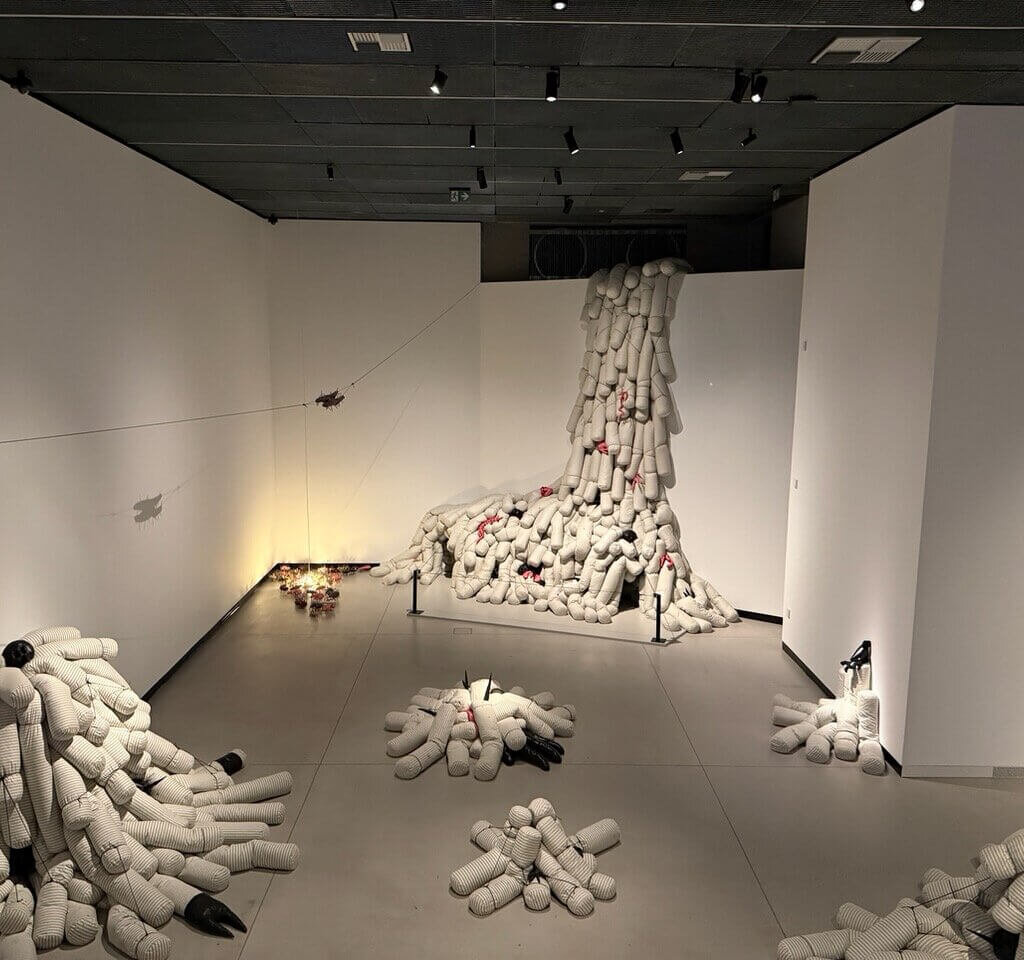
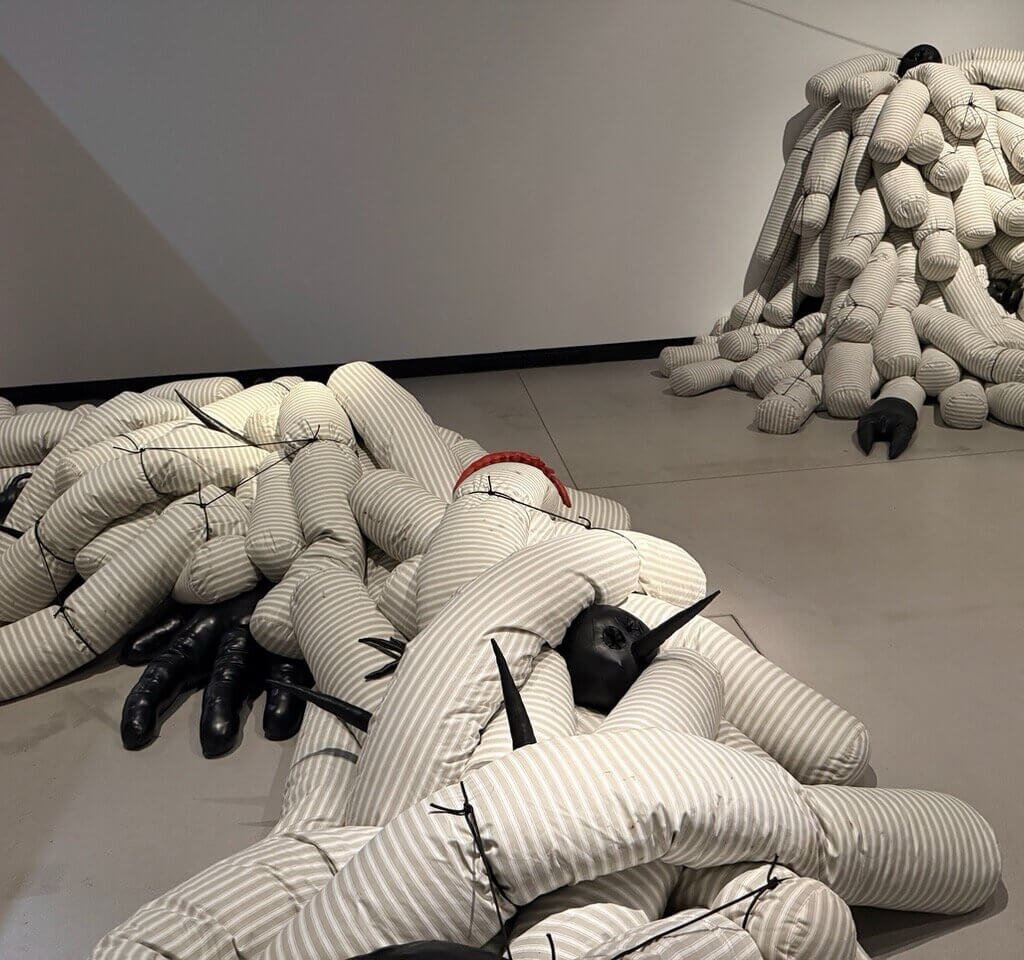
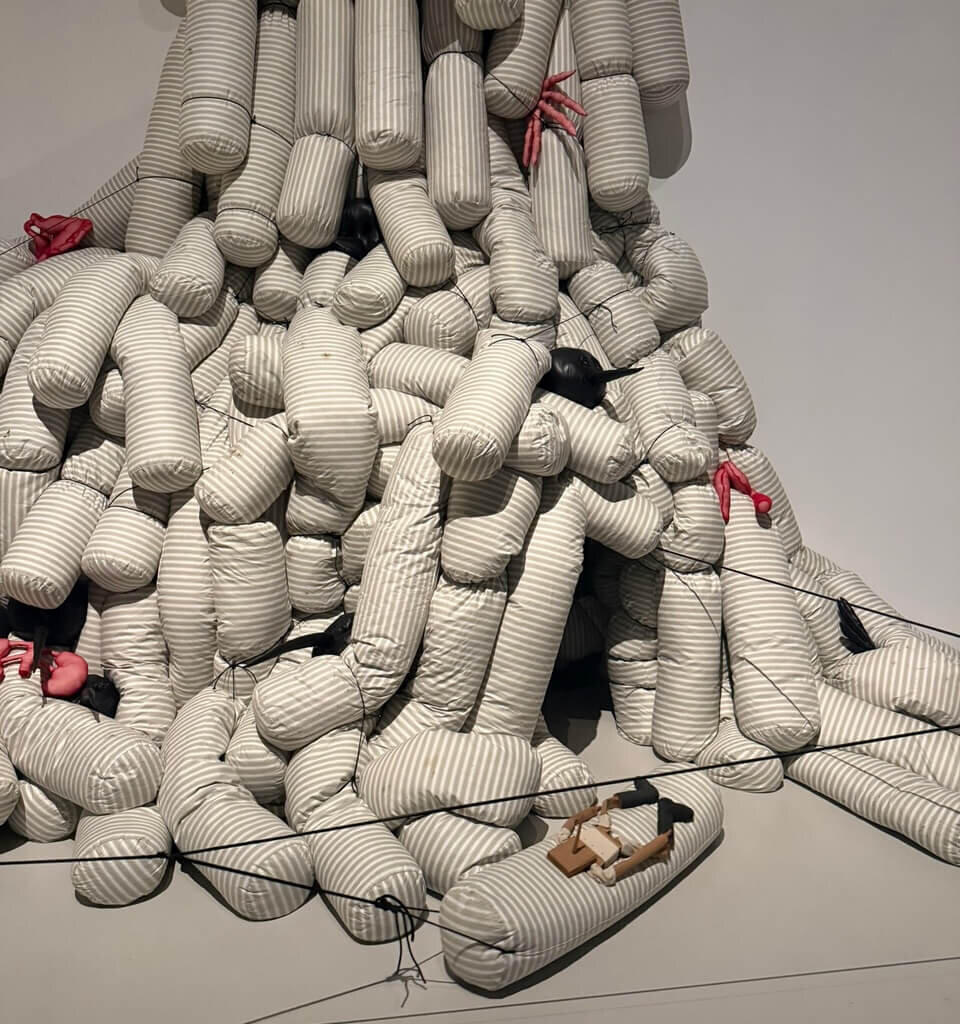
The exhibition begins with Pinocchio, a liminal figure himself. Being neither human nor puppet, he represents to Messager “the two extremes of the human condition” associated with mischief and dishonesty, but also innocence and yearning. As a result, Pinocchio suffers alienation as an outcast – another prime characteristic of those who are neither exiled nor accepted within a society. Messager represents the distress of this experience in her installation Promenade de Pinocchio, where parts of the puppet-boy are found among piles of plush materials. At one point, Pinocchio is dragged through a mound of the pillow-like blocks only to immerge from the other side as the loop continues, clearly representing his inescapable condition.
Human beings are always caught in inward contradiction – something that can be either liberating or bewildering depending on who you ask. Carl Jung would suggest this condition is what makes us uniquely human. He viewed paradox not as an error to be corrected, but as a core attribute of existence worthy of being respected and understood. Messager’s work subscribes to a similar viewpoint, however it does not ignore our equal and opposite desire for structure and absoluteness. Liminality exists within structure for a reason – as we have seen in Pinocchio’s case, being in a fixed liminal state is deeply isolating and distressing for an individual. As many anthropologists suggest, liminality only becomes fulfilling when the subject returns to structure renewed and transformed. Think of it as arriving home after a long period of travel, where one feels great relief from normality and routine.
Messager The Trickster
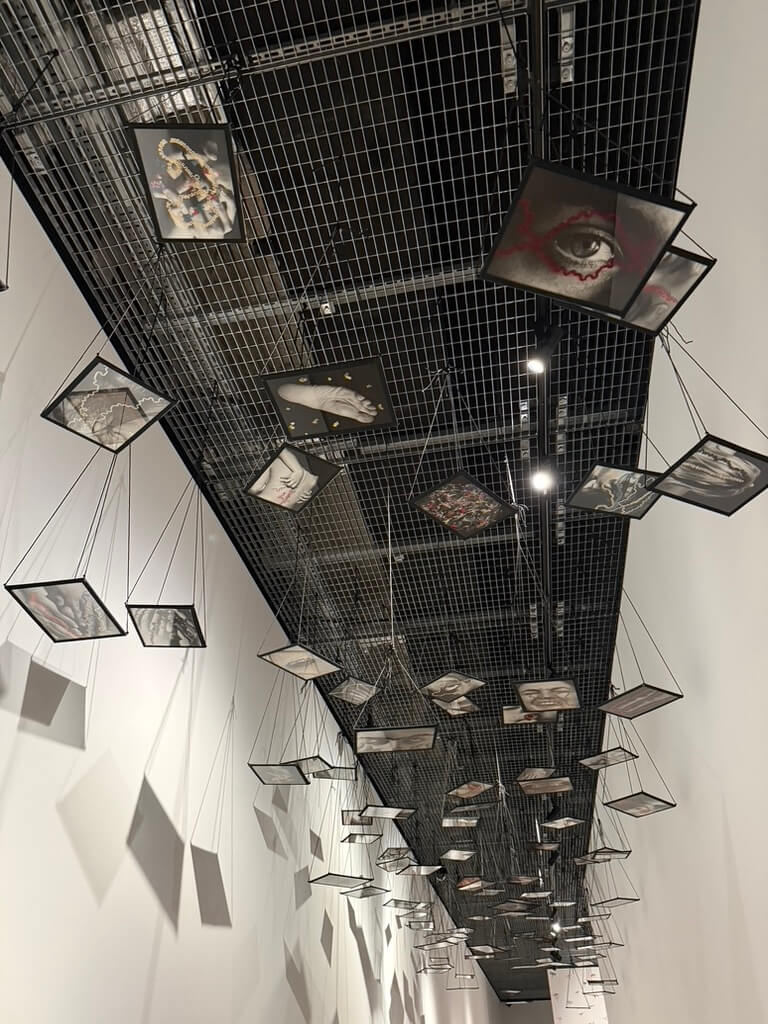
However, Messager often mocks the way structure manifests in society – earning her the title of “trickster” and “peddler” in the art world during the 1970s. Her playfulness and irony is particularly present in Le Femme et… and Le Approches where she mocks the sacredness and mystification of the human body. Unlike Pinocchio, the trickster figure thrives within liminality. Most commonly compared to the Shakespearean fool, though they too are outcasts, they often possess access to truths which those who dwell within structured society do not. In true trickster fashion, Messager provides a tongue-in-cheek approach to intimacy by defacing the female nude in her photographs with a graffiti-like style, suggesting perhaps we take ourselves too seriously at our most vulnerable.
Whales, Monks, and Casinos
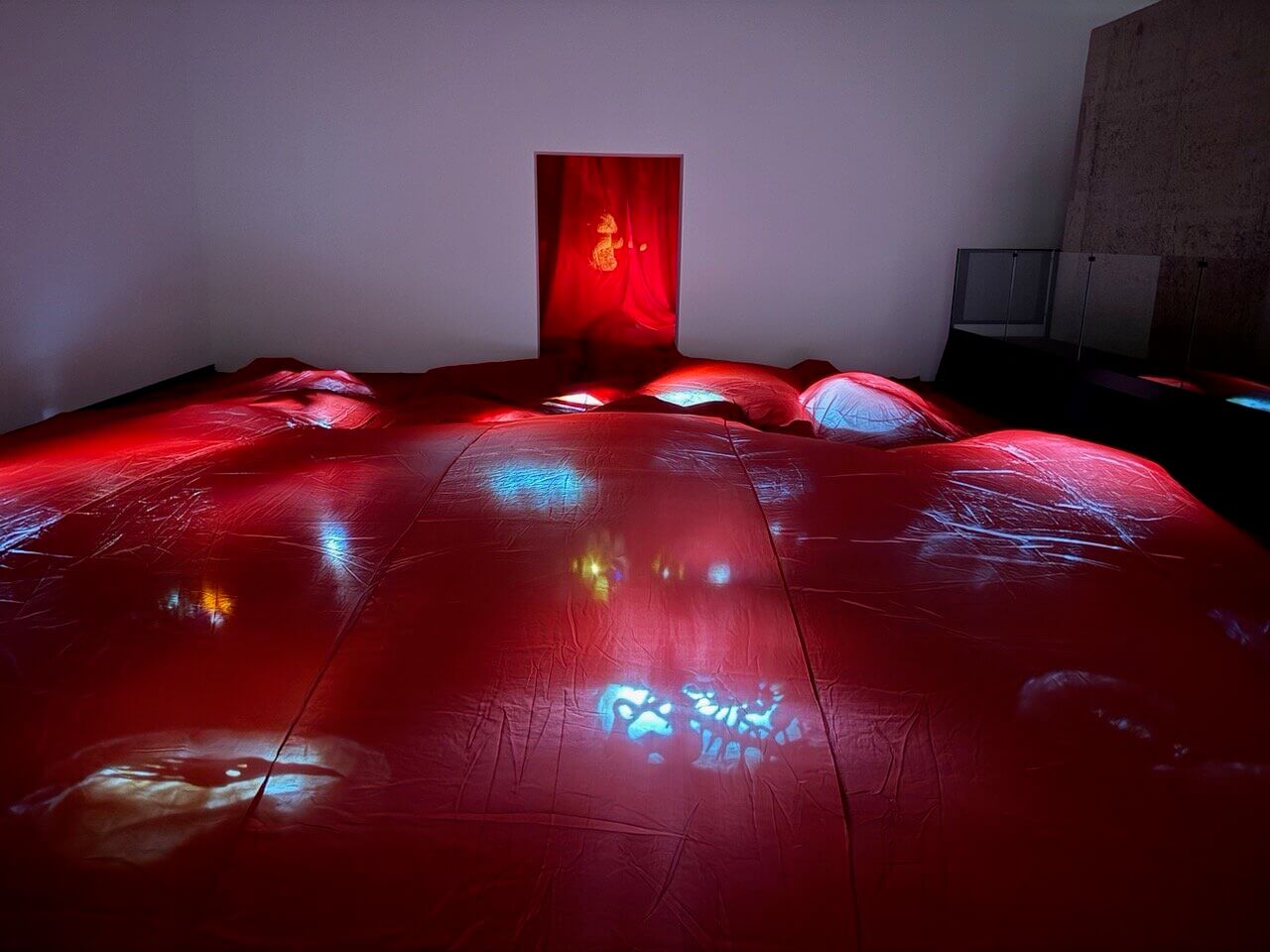
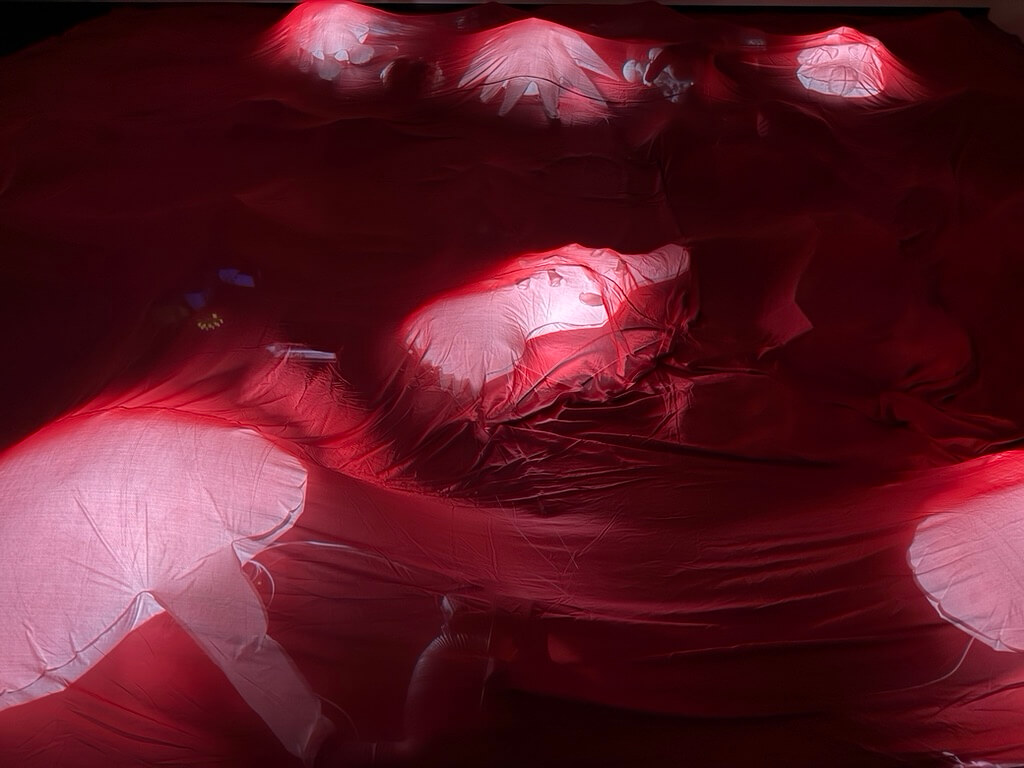
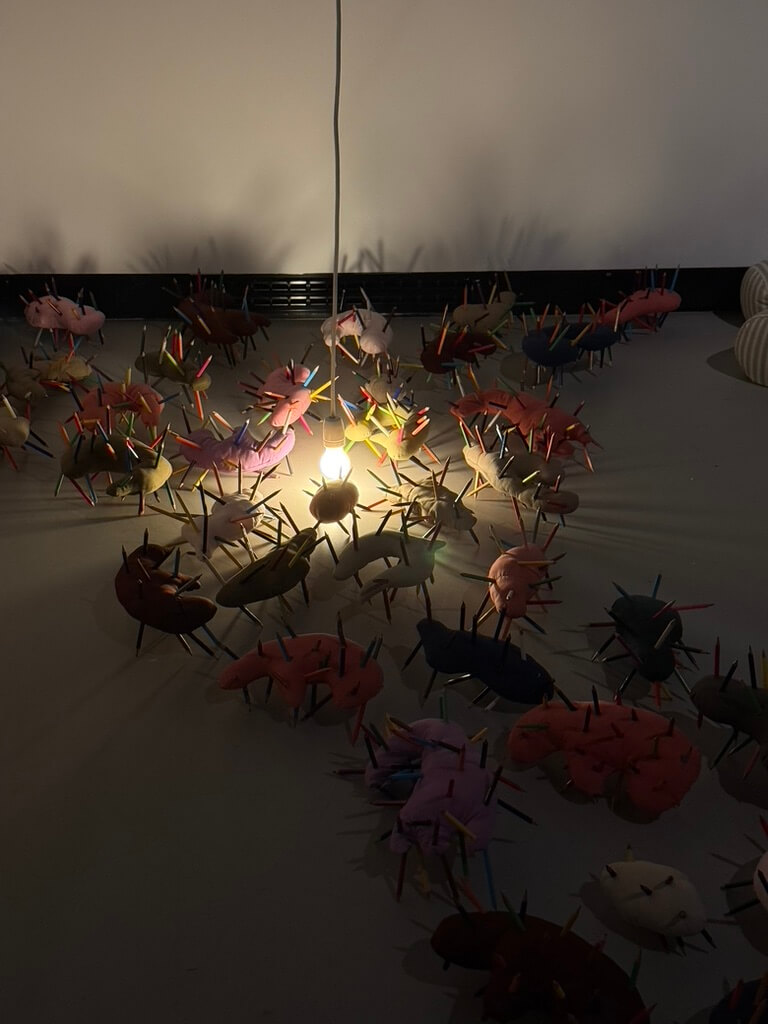
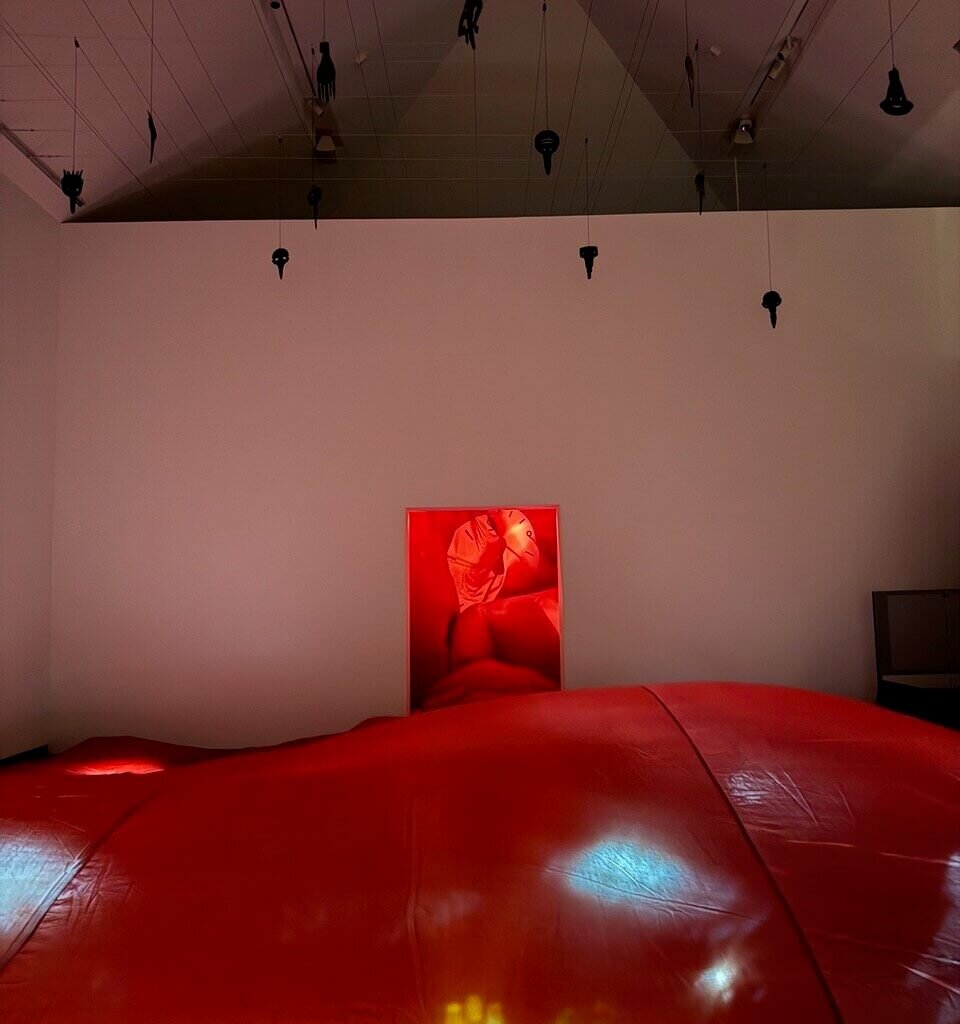
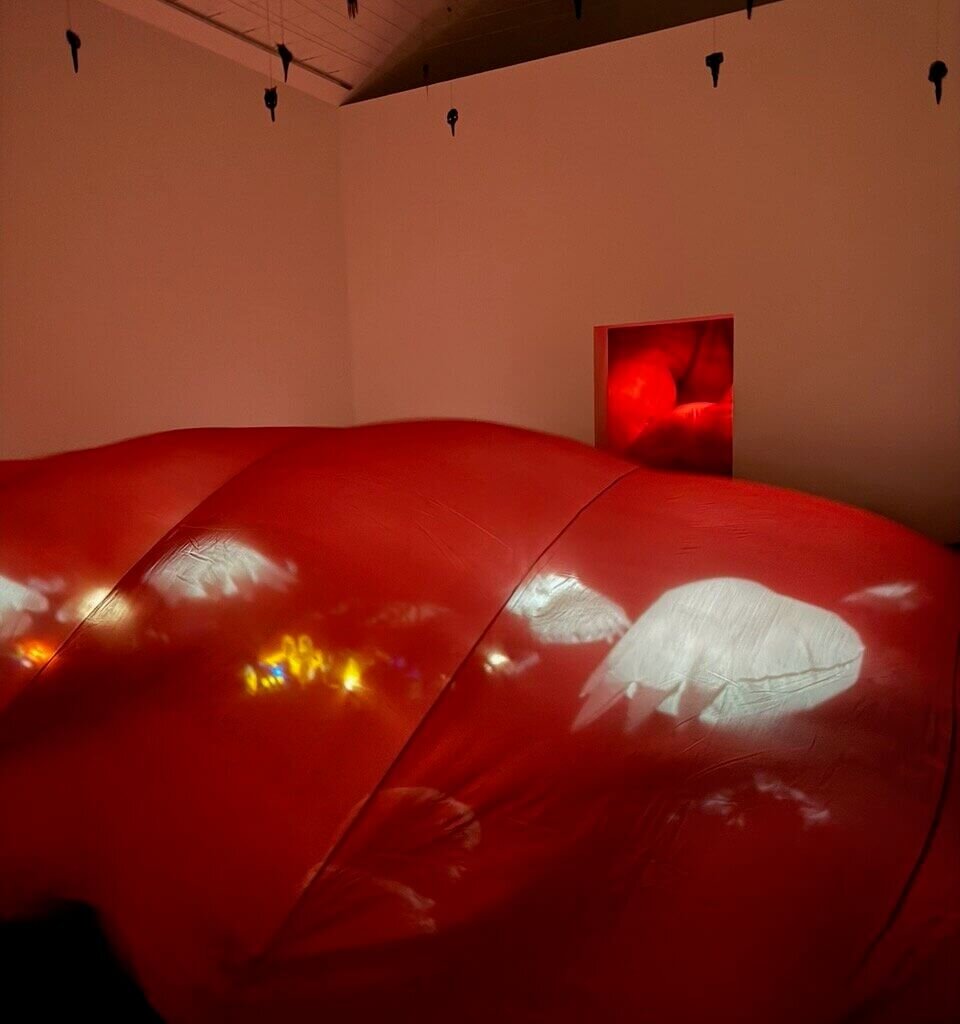
Messager returns to Pinocchio yet again at the climax of the exhibition. This time, we encounter him the belly of the whale, where he finally reunites with his father, Geppetto. In a large, dark room, viewers encounter a translucent red fabric which engulfs the floor on which an array of illuminated bug-like creatures are scattered. From a far away room, air blows through the space which allows the fabric to mimic the interior of something very much alive with a well-functioning digestive system. Again toying with double-meanings, in the belly of the whale, Messager highlights a moment of terror and tender reunion within Pinocchio’s story. However, what struck me the most about this work was its title: Casino. A place possessing contradictory meaning to Messager, the casino represents a place of not just entertainment and desire, but also chaos and disorienting distraction. In a way, Pinocchio, in the midst of chaos, finds ultimate fulfillment in “the casino” when he meets his father. But Messager asks: “What happens when we meet our utmost desires in the deepest recesses, in the ‚belly of a whale‘? And when we find a way out, as Pinocchio eventually does, do we also leave those desires behind?”
In his essay titled The Monks in the Casino, Derek Thompson answers this question rather cynically. He ascribes the modern (mostly man’s) condition to one of simultaneous distraction and risk aversion. In these two states, people become like “monks in a casino” – easily and willingly abstaining from real connection because an alternative, safer option exists within the casino: the digital world. With obvious parallels to the biblical figure of Jonah’s unfortunate experience with whales, Pinocchio escapes the liminal “casino” with his desires fulfilled, leaving his character transformed and enlightened. He leaves behind is mischievous ways, and by dedicating himself to caring for his sick father, he turns into a real boy. However, as Thompson suggests, the monk figures remain stuck in the casino, not because their true desires are fulfilled in it (connection, intimacy, adventure), but because a simulation of them are. By offering quick hits of blissful, anticipant dopamine, the casino nullifies the recognition of true loneliness, and generates a state of abstinence and meditative-like ego-death only Thomas Aquinas could dream of.
Monasteries of Distraction
Unlike Pinocchio, the monks in the casino never leave the belly of the whale and so they are never transformed – making them stuck in a fixed state of liminality. Monks, voluntarily liminal beings, hope to transcend this permanent liminal state in their dedication to the divine, only through whom ultimate transformation comes after death. But in the casino, the house always wins. The chaotic, dismantling nature of liminal states, while potentially cathartic, are also ideal grounds for predatory coercion. The allure of online life – which satiates our appetite for experience the way a donut does for hunger – is a result of an attention-based profit game where the most addictive platforms win. In this way, the liminal experience collapses in on itself to resemble an uncanny imposter of itself – not promising renewal out of chaos, but stagnation within it. Stuck in these states, individuals become like Pinocchio in the beginning of the story: alienated, confused, and deceptive.
The Future Is Human
So, how do we reclaim agency within the casino? The belly of the whale? A precarious liminal state? Is there a way out of it, and if so, how can we emerge transformed rather than wounded? Unfortunately for my thesis, Tragikomedie does not provide a concrete answer. But such is the nature of good art like Messager’s: the kind which rejects the necessity for structure in the hopes that we embrace our human intricacy. The thing about liminality is its inability to be completely tied down as concept. Some would say all life is liminal, that the present is the space between the past and the future. Others would say it’s just a fancy word for the Peter Pan Complex: the inability to grow up and refusal conform to societal expectation. Regardless, such a debate alludes to the complexity of the human experience. When we explore such a capacity for complexity instead of reducing ourselves to fixed identities (an inner structure), perhaps the openness to fulfilling liminal experiences can provide us with the tools needed for reform – both inwardly and communally.
Anette Messager
8 oct 2026 – 28 feb 2027
Galerie 1 & 2
Kunsthalle Praha
Comments