

Comedic Levels of Confusion
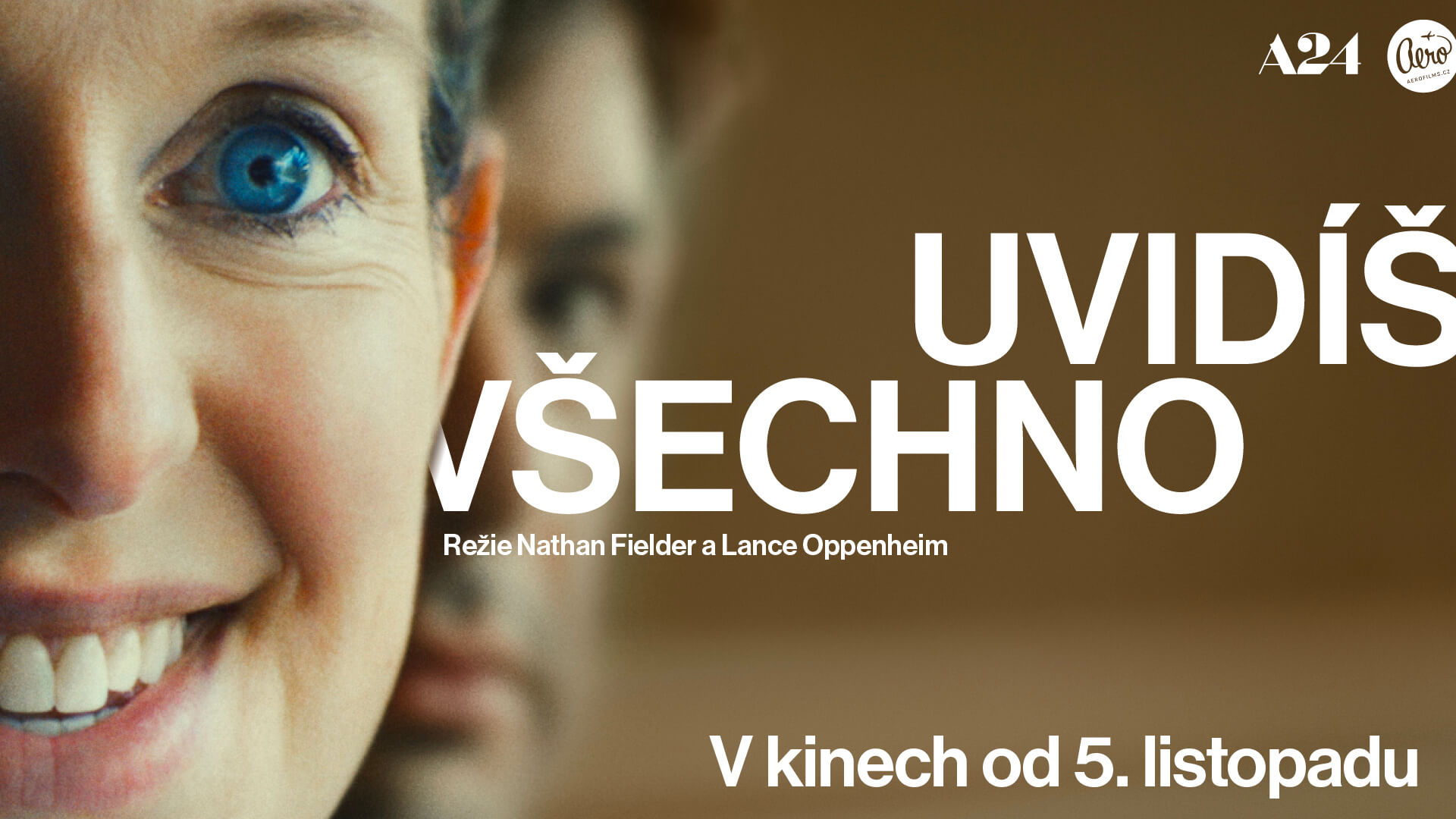
About fifteen minutes into a screening of Nathan Fielder and Lance Oppenheim’s You Can See Everything, my friend turned to me and whispered, “Is this satire?”
If you’ve seen the film, you likely understand where she’s coming from, and if not, this is your spoiler warning. I’ll also begin this with somewhat of a disclaimer: What I’ve learned more than anything from this film is that the more you try to dissect it – the more you try to understand it – the deeper the hole you are digging yourself becomes. There is a reason why critics are raving about it – the subject matter strikes a different chord with not just each viewer but each participant, providing ample opportunity for lively discourse. I will try my best to throw my hat in the ring with this article, though I know I will inevitably end up right back where I started.
The reason for my friend’s comment at the beginning of the three-hour documentary is best summed up by Nathan himself when he calls Elizabeth Holmes’ logic, “Confusing to a comedic level.” This takes place after he and his film crew have been invited into the disgraced founder of Theranos’s home to film the remaining days before her 11-year prison sentence on multiple charges of fraud. Little has been heard from Holmes since her trial in 2022, but as her husband Billy Evans says in the opening lines of the film, they hope that providing “radical transparency” will cultivate a deeper understanding of “Liz” as an individual.
Clear As Mud
What does “radical transparency” look like? To Lance Oppenheim, it means a fully nude shower scene and claustrophobic closeness to his subjects. You can quite literally see everything – pores and all. To Nathan Fielder, it means inserting himself into Liz and Billy’s Del Mar rental in California, posing questions in his unique, awkward, and deadpan manner equally present in his previous work. What ensues is nothing short of a game between two notorious masters of deception. Nathan with his questionable authenticity and Liz with her unrelenting claim to innocence. You will quickly find out that radical transparency also means radical ambiguity – the more information you’re receiving, the muddier your grasp on what’s taking place becomes. And you wouldn’t be alone.
“At the end of the day, I would have in my head what I thought was a very clear idea of what was happening,” Nathan said in an interview with Wired, “and Lance or our camera guy, Jonathan Mitchell, or our DP, David Bolen, or our sound guy, Richard Carlos, they would all have a different take on what actually happened. I was like, how is this possible? We’re all in this room experiencing this thing.”
The result of such an effect is an increasing sense of suspicion and paranoia – not just from Nathan and the crew or Liz and her husband, but also between the audience and the film itself. The question becomes this: how much of this is an act? Who exactly is pulling the strings here?
Uvidíš všechno?
The nuances of language (or the lack thereof) are a poignant subject in the film. As Nathan and Liz sit cozily on the couch one night, they discuss their disagreement on the implications of the word “can”. This is in reference to Liz’s damning claim that the Theranos device “…can perform any test,” when in fact, it could not perform even the most basic of blood analyses. While Nathan insists that such a statement’s meaning is abundantly clear, Liz – through watery eyes – explains that she was implying that with enough development, Theranos’ technology could have the ability to perform any test. Most would agree with Nathan here – this is confusing on a comedic level. However, it’s Liz’s seemingly genuine confusion and perplexity that sows doubt within the audience. She starts to plead with Nathan, claiming she has never lied in her life – a statement so bold, Nathan’s patience begins to crack. Billy quickly intervenes once the tension builds, “She just thinks differently…I know how you feel-” he says, trying to offer some sympathy. “No, you don’t,” Nathan interrupts.
The word “can” shows up in another way, and that’s in the title. I get the privilege of reading it on the billboard-sized promotional poster almost every day as Liz’s gaping blue eyes follow me to the tram. I noticed that the Czech translation for the title is “Uvidíš všechno”, which to my knowledge, translates more directly to “You Will See Everything”. This seems like a bit of a misstep to me – as it implies that one could leave this film with everything clarified. Rather, I think you’ll find the only thing that this supposed “radical transparency” created was three hours of cognitive vertigo. It’s for this reason this documentary serves as a billboard for our “post-truth” era. In our constant pursuit of information – in our belief that its abundance will allow us to understand and predict more about reality – the more lines become blurred between fact and fiction.
A Trip to Fictionland
The first act of this documentary ends with Liz’s send-off to prison. After Nathan gives Liz a “Good luck!” card with some hair dye and sunglasses (a joke that does not land well with her parents), they say their goodbyes in a surprisingly tender moment. Liz does not make another appearance in the film – not as herself, at least. This is where it helps to have done some homework. It’s at this point that Nathan begins conversing with Amanda Seyfried: the actress who played Elizabeth Holmes in the series The Dropout. At first it’s unclear what his intentions are here – as Liz frequently expressed how distressing the show was for her to watch. “They’re not playing me,” Liz allegedly said in an interview with the New York Times, “They’re playing a character I created.” She insists that this is a blatant misquote – that she had said it was a character “they” (Amanda Seyfried and The Dropout) created. Amanda herself does not disagree – acknowledging that the show exists within the realm of “fictionland.” This is a documentary, afterall. But as they continue to discuss the situation, Amanda’s straight hair becomes a bit more distressed, she starts wearing glasses, and her voice gets a little deeper. Yes, Amanda serves as a stand-in for Liz for the rest of the film.
Things get weirder. At this point, Liz has been in prison for two years, and we learn that her husband, Billy, has made some…developments. Firstly, a holographic reproduction of Liz stands in his living room – “a monument of love” he calls it. Secondly, we learn that Billy has gained control over practically everything about his wife’s image. He not only has her power of attorney, but also poses as Liz on her Twitter account – commenting on posts in a crude manner. A question is also raised about the financial gain Billy expressed he was entitled to before production began. It’s clear that Billy has taken on the role of the villain: he is controlling and profiting off of Liz’s image while she’s in prison, all the while claiming that he “…just knows what she would want.” But the real kicker, is that the audience learns all of this information through reenacted scenes played by actors. By this point, the documentary has become less so concerned with discovering the reality of the situation, but with reconstructing it in an increasingly absurd manner. This puts the audience in a difficult position. We are easily suspicious of how Liz and Billy were constructing their reality around their dogmatic faith in Liz’s pure intentions. But now, the film itself appears to be just as guilty of bending the facts.
Does this discredit the entirety of the film? Some would say so. Though it has been the first documentary to receive an Oscar nomination for Best Picture and has sold out box offices worldwide, many are skeptical of the film’s long-term effects. After all, narrative control is a powerful thing. It’s difficult not to wonder if You Can See Everything is exactly the kind of film Elizabeth Holmes would have wanted to be made about her – a do-over, a “Theranos 2.0”. As Henry Roberts for The Guardian: “Some people are simply arrogant enough to think they can get away with their lies. But others become so invested in their skewed version of reality that to refuse a documentary crew would be like admitting their deception…But unlike Armstrong, Holmes still insists she has done nothing wrong.” Adding fiction to the mix could very well strengthen this “skewing” effect to Liz’s advantage.
However, this is not the first time that fictional elements have been employed in a documentary. When Errol Morris’ Thin Blue Line was released in 1988, it received criticism from documentary traditionalists for using actors to perform the conflicting testimonies which wrongfully implicated Randall Dale Adams of a police officer’s murder. Many critics are claiming Fielder is doing something similar here: utilizing fiction as a tool to uncover a greater truth.
You Can Know Nothing
I cannot say what that greater truth is, but what I can point to are the glimpses of interiority we receive from Nathan at the end of the film. Throughout this process, it is clear that Nathan has grown more sympathetic, if not protective, towards Liz. He shows more concerns over her privacy as well as Billy’s questionable intentions. But ironically, it is Amanda who seems to be grounding him in his role as a director. “I’m not trying to put my feelings in,” he reassures her, “I’m just trying to be accurate.” His success in doing so is just as disputable as Liz’s claim to innocence.
Nathan’s previous work such as The Rehearsal grapples with the futile attempts human beings make to understand each other. The butt of the joke, however, is although Nathan tries to control every aspect of his subjects’ environments, he can never perfectly manufacture the perfect conditions for eliminating uncertainty. In the same way, You Can See Everything may hold true to its title, but that does not mean you will walk away knowing anything – about Theranos, Elizabeth Holmes, or Nathan Fielder. “We want this to be a human story,” said Liz at the start of the film. This may be the only statement worth upholding of hers. If you’re able to withstand the dizziness induced by this film, what you will observe is a deep desire of those involved to understand and be understood – regardless of what the truth may be. And if that means making a documentary for which Amanda Seyfried could receive an award for Best Supporting Actress, then so be it.
Comments